


Antwort Why is it called D chord? Weitere Antworten – What does D chord mean
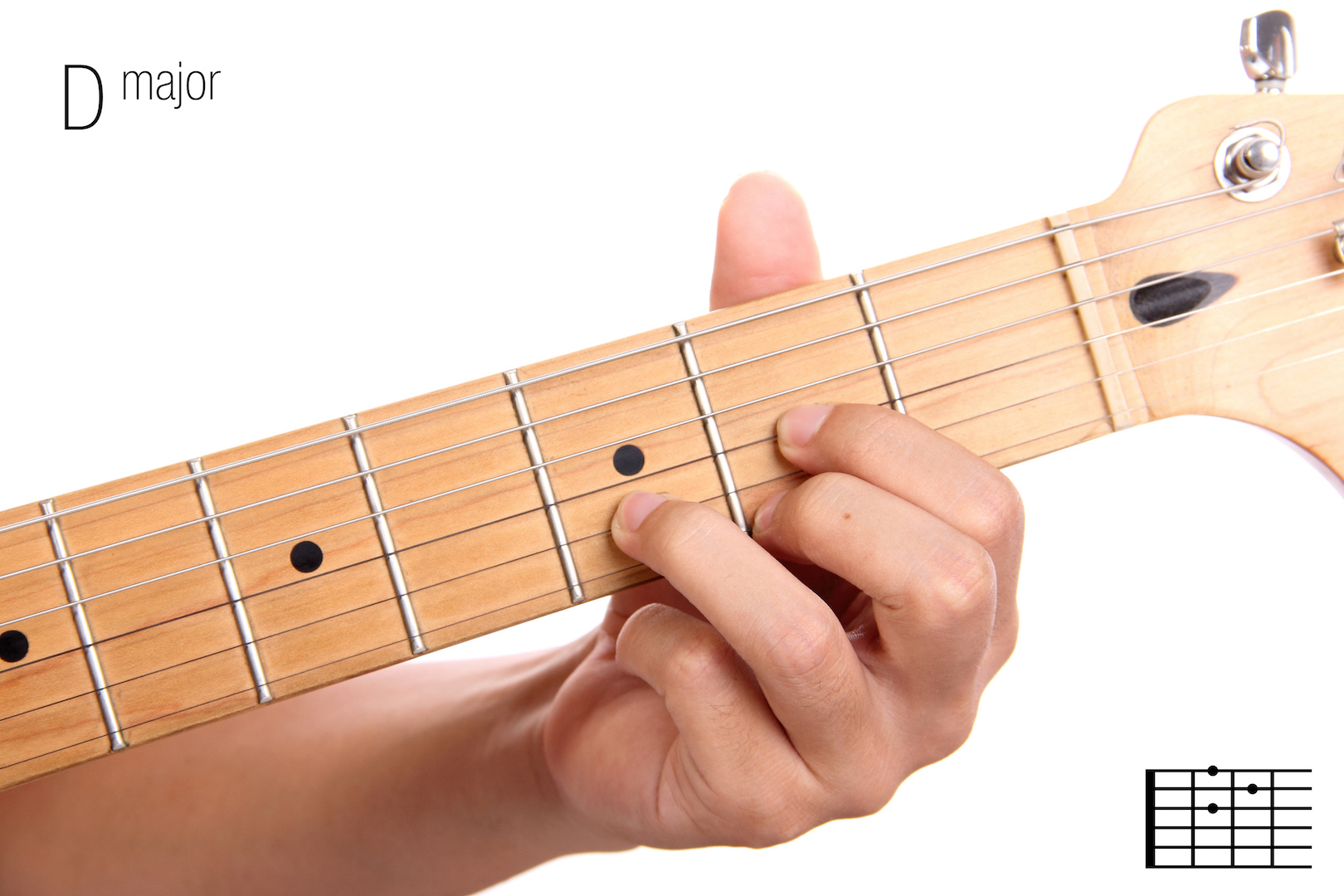
The D chord is a major triad, made up of three notes: D, the root; F#, the third; and A, the fifth, as shown in Example 1. As I've mentioned previously, many chord shapes feature doubled notes.The D Major Chord I, or what is called simply the D Major chord (Dmaj) starts on D (the 1st note of the scale), then plays the 3rd (F#) and 5th (A) notes. To add the seventh (called Dmaj7) the 7th note is added onto the chord (which is C#).The name of a chord is based upon its root. In a C Major chord it starts with a C. Go up a 3rd, this is an E. Up another 3rd and you have a G.
What does A D mean in guitar : On down and that's our a over D chord. Hey thanks for watching if you want to learn more guitar chords please check out these.
Why is D chord difficult
The two biggest problems beginners have with the D chord are getting the shape confidently under your three fingers and muting the bottom two strings. To help with the fingering, you can practice transitioning from a G major chord or A major chord to the D shape and back again.
Is D minor the saddest chord : It's the key, some people say, which often triggers immediate weeping. When we turn to the scholars over the centuries and ending in this one, among many musicologists, composers, songwriters, there is an ever-expanding consensus that D minor leads all others in its evocation of melancholy.
The term "12-bar" refers to the number of measures, or musical bars, used to express the theme of a typical blues song. Nearly all blues music is played to a 4/4 time signature, which means that there are four beats in every measure or bar and each quarter note is equal to one beat.

"A" was nothing more than a label for the lowest one. And that lowest pitch was not necessarily the one we would call A today. Apel says that in two versions of Boethius' system the letter A actually refers to what we now call C.
Why is it called A7 chord
In music theory, the 'A7' is termed as a dominant seventh chord, constructed by adding a minor seventh to a major triad. The term 'dominant' here refers to the fifth degree of a diatonic scale, called the 'dominant'.D major is well-suited to violin music because of the structure of the instrument, which is tuned G D A E. The open strings resonate sympathetically with the D string, producing a sound that is especially brilliant. This is also the case with all other orchestral strings.It means that you should tune your 6th string (the low E) down to D.

Why Is It So Hard Let's kick off by understanding why the C major can be so hard to learn. The main reason is due to the stretch that all three fingers need to make. Most chord shapes you have tackled up to now will span two frets, whilst the C major chord spans 3.
What is the hardest chord to learn : The six-string F chord is one of the hardest standard chord shape to play on the guitar. When many people try to play the F chord on guitar (and often succeed), it's with far too much struggle and effort than is actually necessary. Even extremely influential guitarists can have a hard time with barre chords.
Why is the D chord so hard : The two biggest problems beginners have with the D chord are getting the shape confidently under your three fingers and muting the bottom two strings. To help with the fingering, you can practice transitioning from a G major chord or A major chord to the D shape and back again.
Why is D minor so sad
This so-called ?flatted third? is closer to the root note, and the distance from the major third is thought to create peripheral dissonance and a jarring discomfort in the listener's ear. And by making the note go a half-step down rather than up, it creates a ?feeling down? directional emotion.

Artists like Chuck Berry and Elvis Presley used the 12-bar blues as a foundation for their rock and roll tunes, while jazz musicians often incorporated it into their compositions and improvisations. Despite its transformation across genres, the 12-bar blues has always retained its essential character.27 songs recorded and released by the Beatles use a 12 bar blues progression or something comparable. Of those 27, 15 were original compositions and 12 were covers. Below are all 28 tracks, listing their year of release, tonality, a concise harmonic analysis, and brief commentary.
Why is C called C and not B : The usual explanation is that Dennis Ritchie derived C from a language called B, which Ken Thompson derived from BCPL, which Martin Richards derived from CPL, which was inspired by Algol. So in the chain Algol -> CPL -> BCPL -> B, C seemed like a logical name for a successor.