


Antwort Who are the three fathers of economics? Weitere Antworten – What are the 3 major theories of economics

The 3 major theories of economics are Keynesian economics, Neoclassical economics, and Marxian economics. Some of the other theories of economics are monetarism, institutional economics, constitutional economics etc.Spanning three centuries of history, from the dawn of the industrial age to modern times, three diverse thinkers developed their own landmark theories on commerce, labor, and the global economy.John Maynard Keynes, 1st Baron Keynes CB, FBA (/ke?nz/ KAYNZ; 5 June 1883 ? 21 April 1946) was an English economist and philosopher whose ideas fundamentally changed the theory and practice of macroeconomics and the economic policies of governments.

Who is the father of macro economics : John Maynard Keynes
John Maynard Keynes (1883?1946) was an early 20th-century British economist, best known as the founder of Keynesian economics and the father of modern macroeconomics, the study of how economies—markets and other systems that operate on a large scale—behave.
Who created the 3 laws of economics
Adam Smith
The law of self-interest, the law of competition, and the law of supply and demand were the three laws of economics written by Adam Smith.
Who were the three great thinkers who changed economics : The three economists profiled here — Adam Smith, Karl Marx, and John Maynard Keynes — contributed to economics as a science.
| Group "A" | Group "B" | |
|---|---|---|
| (1) | Adam Smith | Principles of Economics |
| (2) | Micro Economics | Aggregates |
| (3) | Macro Economics | Prof. Boulding |
| (4) | Dr. Marshall | Father of Economics |
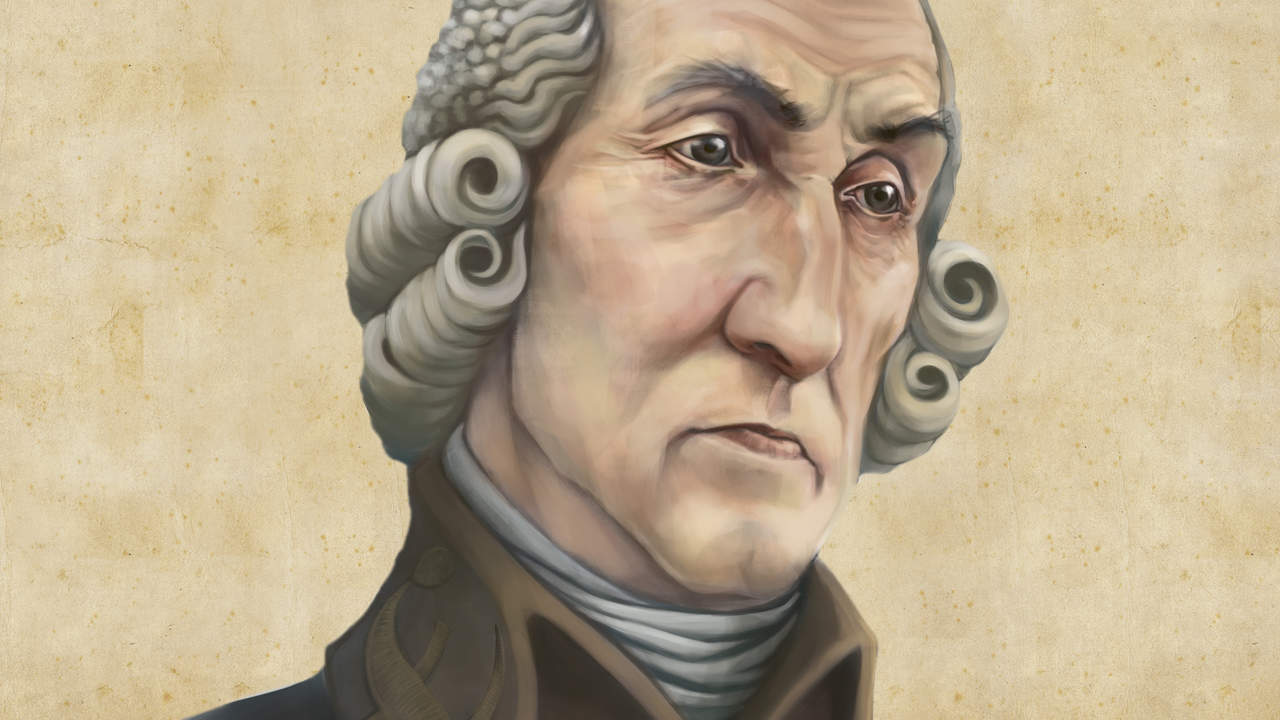
The father of economics is regarded as Adam Smith.
Who are the 4 great economists
Economists such as Adam Smith, Karl Marx, John Maynard Keynes, Friedrich Hayek and Milton Friedman are known throughout the world. Their philosophies have influenced iconic politicians, divided continents, spawned political parties and had striking impacts on how we live.Anne-Robert-Jacques Turgot,an 18th century French economist, is often considered the "mother of economics". Amartya Sen, an Indian economist born in 1933, is also known as the "Mother Teresa of Economics".In its modern form, macroeconomics is often defined as starting with John Maynard Keynes and his book The General Theory of Employment, Interest, and Money in 1936.

Adam Smith's 3 laws of economics are Law of demand and Supply, Law of Self Interest and Law of Competition.
Who is the father of free economics : Adam Smith FRS FRSE FRSA (baptised 16 June [O.S. 5 June] 1723 ? 17 July 1790) was a Scottish economist and philosopher who was a pioneer in the thinking of political economy and key figure during the Scottish Enlightenment.
Who is the No 1 economist in the world : Adam Smith is considered one of the most influential economists. He is also known as the father of modern economics. Smith was a proponent of the free market economy and opposed any government intervention in the market. His book, the Wealth of Nations, contains many ideas that form the basis of classical economics.
Who are the two father of economics
Answer: Adam Smith is considered the father of economics. According to Smith, the government does not manipulate the economy, the country's resources are used most effectively, the free-market problem is solved, and the country's welfare and best interests are agreed.

"The Big Three in Economics" traces the turbulent lives and battle of ideas of the three most influential economists in world history: Adam Smith, representing laissez faire; Karl Marx, reflecting the radical socialist model; and John Maynard Keynes, symbolizing big government and the welfare state.The emergence of econometrics as the sister discipline of economics.
Who is the father of capitalism : Adam Smith
Adam Smith, The Wealth of Nations, 1776. Adam Smith was the 'forefather' of capitalist thinking. His assumption was that humans were self serving by nature but that as long as every individual were to seek the fulfillment of her/his own self interest, the material needs of the whole society would be met.