


Antwort What is the German synth brand? Weitere Antworten – What is the French brand of synthesizers

Kodamo , Another French synthesizer maker.Eurorack is a format of modular synthesizer invented by Dieter Doepfer which is basically a miniaturized version of the original formats used in the 60s and 70s by Moog and Roland.the Moog synthesizer
The 1960s saw the introduction of the Moog synthesizer and the Buchla Modular Electronic Music System, created around the same period. The Moog was composed of separate modules which created and shaped sounds, such as envelopes, noise generators, filters, and sequencers, connected by patch cords.

What is a Eurorack synth : For synthesizers, Eurorack is a de facto standard to allow different modules to fit in the same cases and communicate among themselves. The basic requirement is compatibility with the Doepfer technical specifications: Mechanical: A100 Construction Details.
What was the first German synthesizer
The Trautonium is an electronic synthesizer invented in 1930 by Friedrich Trautwein in Berlin at the Musikhochschule's music and radio lab, the Rundfunkversuchstelle.
What is the best synthesizer brand in the world : Most popular synth brands around the world
Moog is first across the line in the USA, while Arturia leads in France. The latter also tops the Google ranking in the UK, Ireland, Colombia, and South Korea, while Moog seems to have many fans in the Philippines.
Robert A. Moog
Robert A. Moog. In 1964, inventor Bob Moog introduced the first complete voltage controlled modular synthesizer, an instrument capable of producing a wide variety of electronic sounds.
Moog synthesizer
At Cornell, Moog began work on his first synthesizer components with composer Herb Deutsch. At the time, synthesizers were enormous, room-filling instruments; Moog hoped to build a more compact synthesizer that would appeal to musicians.
What was the first brand of synthesizer
Moog's company, R. A. Moog Co. (later known as Moog Music), produced numerous models from 1965 to 1981, and again from 2014. It was the first commercial synthesizer and established the analog synthesizer concept.The Moog synthesizer (/?mo??/ MOHG) is a modular synthesizer invented by the American engineer Robert Moog in 1964. Moog's company, R. A. Moog Co. (later known as Moog Music), produced numerous models from 1965 to 1981, and again from 2014.modular voltage-controlled synthesizer
On October 12, 1964, Bob Moog unveiled the first modular voltage-controlled synthesizer, an instrument that forever changed the course of modern music.

Europe ? The Final Countdown
The melody that plays from the beginning was created (mostly) using a Roland JX-8P.
What synthesizer does Daft Punk use : Roland Juno-106
Released in 1984, the deep analog sound of the 106 has made it one of the cornerstones of the early synthesizer era, and one many producers still pine deeply for. It's popped up on nearly every Daft Punk album, but most notably on ?Rollin' & Scrathin'? from 1997's Homework.
Does Moog still exist : In 1978, he founded a new company, Big Briar. Moog Music filed for bankruptcy in 1987 and the Moog Music trademark was returned to Robert Moog in 2002, when Big Briar resumed operations under the name Moog Music. In June 2023, Moog Music was acquired by inMusic.
Who is the father of synth
Robert Arthur Moog
Robert Arthur Moog (/mo??/ MOHG; May 23, 1934 ? August 21, 2005) was an American engineer and electronic music pioneer. He was the founder of the synthesizer manufacturer Moog Music and the inventor of the first commercial synthesizer, the Moog synthesizer, which debuted in 1964.
Moog's company, R. A. Moog Co. (later known as Moog Music), produced numerous models from 1965 to 1981, and again from 2014. It was the first commercial synthesizer and established the analog synthesizer concept. R. A. Moog Co.Several Moog Voyagers can be seen in photos of Daft Punk's pyramid, i.e. their live gear setup.
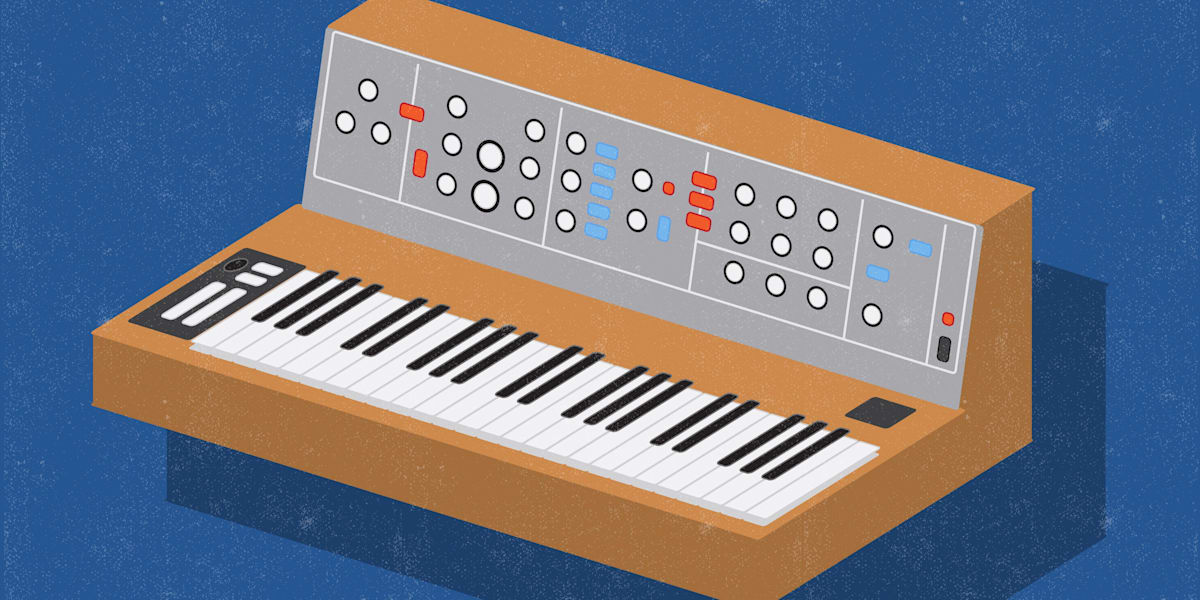
Did Pink Floyd use Moog synthesizer : The Model D was used by seemingly everyone, including Herbie Hancock, Frank Zappa, Pink Floyd and Kraftwerk, creating new genres of music styles and never-before-heard-of sounds.