


Antwort What are the 5 basics of image editing? Weitere Antworten – What are the basic of Image Editing

Basics of image editing
Raster images are stored in a computer in the form of a grid of picture elements, or pixels. These pixels contain the image's color and brightness information. Image editors can change the pixels to enhance the image in many ways.There are three stages of photo editing.
- Straight out of the camera.
- Global Edits.
- Detailed Edits.
Here are 8 tips for better, faster photo editing.
- Get Organized.
- Be Selective.
- Don't Overdo It.
- Check Your Histogram.
- Tweak Shadows and Highlights.
- Understand White Balance.
- Don't Be Afraid to Crop.
- Stay Consistent.
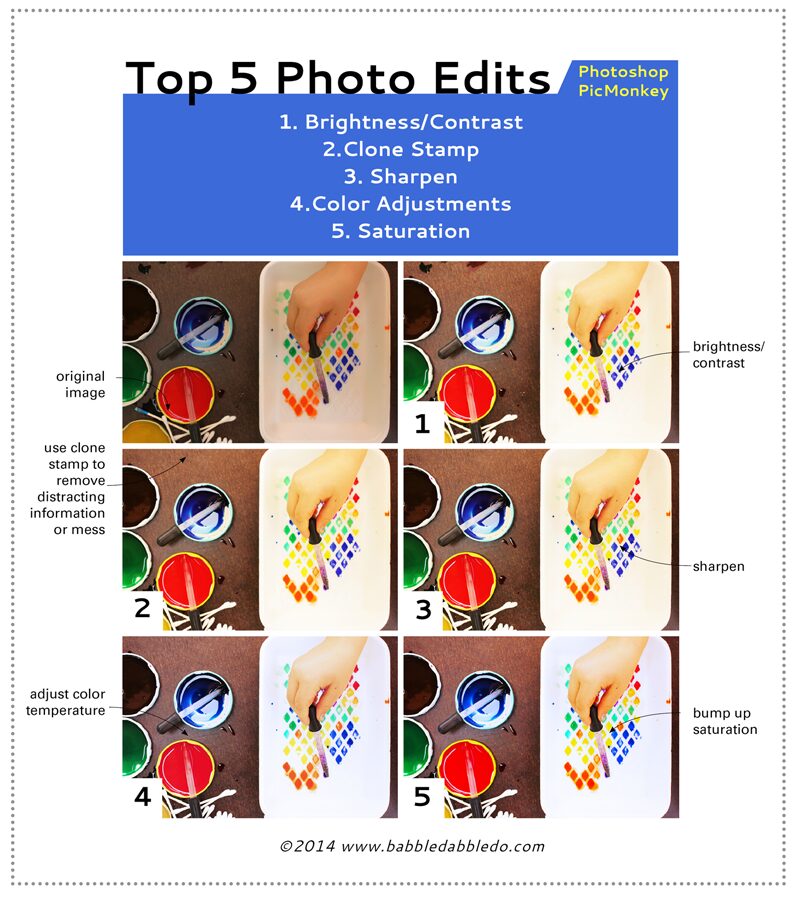
What are the steps to edit an image : Photo Editing Basics
- Crop your images and clean them up.
- Adjust white balance.
- Adjust exposure and contrast.
- Adjust color vibrancy and saturation.
- Finalize and share.
How do I start basic editing
Video editing 101: An intro to editing videos (2024)
- Shoot enough to edit well.
- Organize your footage.
- Make a plan.
- Choose clips that show important action.
- Use establishing shots.
- Use match cuts.
- Use the right transitions — or none at all.
- Pay attention to pacing.
How can I learn basic editing : Here's a step-by-step guide to follow to learn video editing:
- Make sure your computer hardware can handle video editing.
- Download specialized video editing software.
- Take footage and upload it so you can practice.
- Organize your video files strategically.
- Consider taking a video editing course.
- Review Murch's Rule of Six.
Review these six steps to learn the tricks every content editor ought to have up their sleeve.
- Step 1: Clarify the Subject Matter.
- Step 2: Review the Structure and Formatting.
- Step 3: Make Line and Copy Edits.
- Step 4: Analyze Voice and Tone.
- Step 5: Check Sourcing and Citation.
- Step 6: Consider SEO.

Here some of his tips that every photo editor needs to know, whether you're a beginner or a professional.
- Import and Select Photos.
- Set a Game Plan.
- Straighten, Rotate, and Crop Your Image.
- Make Technical Fixes and Adjustments.
- Adjust Vibrance and Saturation.
- Enhance Light and Shadows.
- Add Final Touches and Share.
What is the golden rule of editing
Plan more and edit less
That's the golden rule of editing. Before you start writing a post, spend a few minutes planning.How to Learn Photo Editing
- ?Crop you image.
- Adjust White Balance.
- Adjust Contrast.
- Remove Noise.
- Sharpen Your Image.
- Finalize Your Image and Share.
It should be noted that the stages of editing will vastly differ between skillset and industry. With feature films, they would follow; Logging, First Assembly, Rough Cut, Fine Cut, and Final Cut.
How to Professionally Edit Photos
- Select a Photo Editor.
- Apply Lens Corrections.
- Crop and Straighten.
- Make Basic Adjustments.
- Adjust the White Balance.
- Add Effects.
- Refine Effects with Masking.
- Use Local Adjustments.
What is the first rule of editing : Rule One: Never make a cut without a positive reason.
Some scenes require no editing at all if the composition and camera movement are strong enough to support the intent of the scene. Other scenarios, particularly action and montage sequences, require constant cuts in order to communicate the scene's intent.
What are the 6 rules of editing : Murch's six rules on editing consist of Emotion, Story, Rhythm, Eye trace, Two- dimensional Plane of Screen, and Three-dimensional Space of Action, which all have different values in order of importance for the cut.
What are the 7 C’s of editing
Writing that adheres to the 7 C's helps to establish your credibility as a technical professional. Revise the following memo so that it adheres to the 7 Cs; make it clear, coherent, concrete and concise, while also being complete, courteous and correct.

11 basic video editing principles
- Organize your footage. ?You have to be organized,? says Tiff Bauer, former video producer at Descript.
- Make a plan.
- Choose clips that show important action.
- Use establishing shots.
- Use match cuts.
- Use the right transitions — or none at all.
- Pay attention to pacing.
- Choose a color scheme.
The philosophy that underlies Elevation Editing's services is to go beyond what typical editing services provide. The foundation of this philosophy is what I call the "6 C's": correctness, clarity, conciseness, consistency, commenting, and customization.
What are the 8 rules of photography : WHAT'S INCLUDED
- Rule of Thirds.
- Leading Lines.
- Balancing Elements.
- Golden Spiral.
- Reflections.
- Frame within a Frame.
- Patterns.
- Cropping.