


Antwort What age is too late for LASIK? Weitere Antworten – Is LASIK worth it over 40
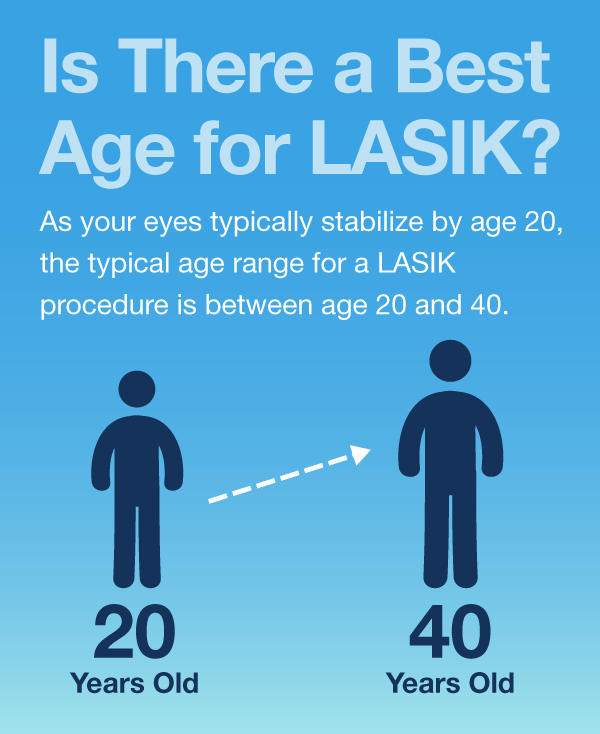
Many patients over 40 ask if LASIK is worth the cost. Of course, the primary factor is the frustration level you experience when wearing contacts or glasses. For many, the convenience and improved quality of life provide an excellent return on investment.There is no upper age limit for having the procedure. People can safely have LASIK surgery in their 60s and 70s if they are healthy enough to undergo surgery. However, LASIK will only stop being effective when or if the patient develops cataracts. Older teens and young adults are not typically candidates for LASIK.If you're over 50, but have little to no signs of cataracts developing, you may be a candidate for LASIK. In fact, corneas strengthen with time, so in some ways, patients in their 50s are at less risk than patients in their teens and 20s!
Can I do LASIK at 30 : The Bausch and Lomb Technolas 217 is FDA-approved for those 18 and older and there is no set age that people should get it. However, there are a few reasons that patients in their 20's and 30s may find it is a great time to invest in LASIK.
How long does LASIK last after 40
As time goes on, some people might see some blurriness return. This sometimes occurs with age-related changes but can be corrected. Most people still see the effects of their LASIK forever. However, some may need to have enhancement LASIK surgery after 10 years.
Is there something better than LASIK : PRK may be a better option than LASIK for people with thin or flat corneas, or for athletes and those with an active lifestyle or career (such as a pilot or race car driver) who are concerned about dislodging the flap after surgery.
Certain health conditions can increase the risks associated with LASIK surgery or make the outcome less predictable. Doctors may not recommend laser refractive surgery for you if you have certain conditions, including: Autoimmune disorders, such as rheumatoid arthritis.

Certain conditions, such as autoimmune diseases (e.g., lupus, rheumatoid arthritis), immunodeficiency states (e.g., HIV) and diabetes, and some medications (e.g., retinoic acid and steroids) may prevent proper healing after a refractive procedure. You actively participate in contact sports.
Is 55 too old for laser eye surgery
While there is currently no age limit for older adults wanting LASIK surgery, there are some vision conditions affecting adults age 40 and above that can't be treated with this surgery. These conditions are: Presbyopia or blurry near vision typically occurring around age 40. Cataracts or glaucoma.While the minimum age for LASIK surgery is 18 years old, there is technically no age limit for laser vision correction.Additionally, patients who receive the surgery between ages 25 and 35 often see the best results with the fastest recovery times. For nearsighted people, vision typically changes periodically throughout early adulthood, so there has yet to be an exact age requirement for LASIK.

Another tangible benefit of having LASIK in your 20s or 30s is the money you can save for years to come. The sooner you have LASIK, the sooner you can start to put the money you spend on glasses, contacts and cleaning supplies into your savings account (and watch it grow!).
Is it worth getting LASIK at 45 : Even those over 40 or 50 years old can benefit from the procedure, which is an investment that is worth it compared to wearing glasses or contacts for the rest of their lives. LASIK after 40 can provide improved vision for a long time after the initial surgery, although it is important to have realistic expectations.
Why do I have blurry vision 5 years after LASIK : Regression. Regression is a rare but possible complication of LASIK surgery. It is a condition in which the cornea regresses back to its original shape, undoing the effects of the surgery. Regression can cause a return of nearsightedness, farsightedness, or astigmatism, leading to blurry vision.
Who is not suitable for laser eye surgery
Individuals under 18 years of age. People with unstable prescriptions. Those with certain eye diseases like glaucoma or keratoconus. Individuals with severe dry eye syndrome.

You might notice increased light sensitivity, glare, halos around bright lights or double vision. Even when a good visual result is measured under standard testing conditions, your vision in dim light (such as at dusk or in fog) may be reduced to a greater degree after the surgery than before the surgery.3% of patients have serious problems after LASIK, such as dry eyes or infection. 90% of LASIK patients experience 20/20 vision after surgery. Furthermore, 99% of patients achieve 20/40 vision. Only 3% of patients regret getting LASIK.
Has LASIK ever failed : Patients who previously felt doomed to ever-worsening vision were seeing 20/20 again. Some of them even improved their site to better than 20/20. While most patients received much-needed relief, some ran into trouble. At the end of the 90s, the rate of procedures where LASIK went wrong was approximately 5%.