


Antwort Is display flex a block element? Weitere Antworten – Is display flex a block

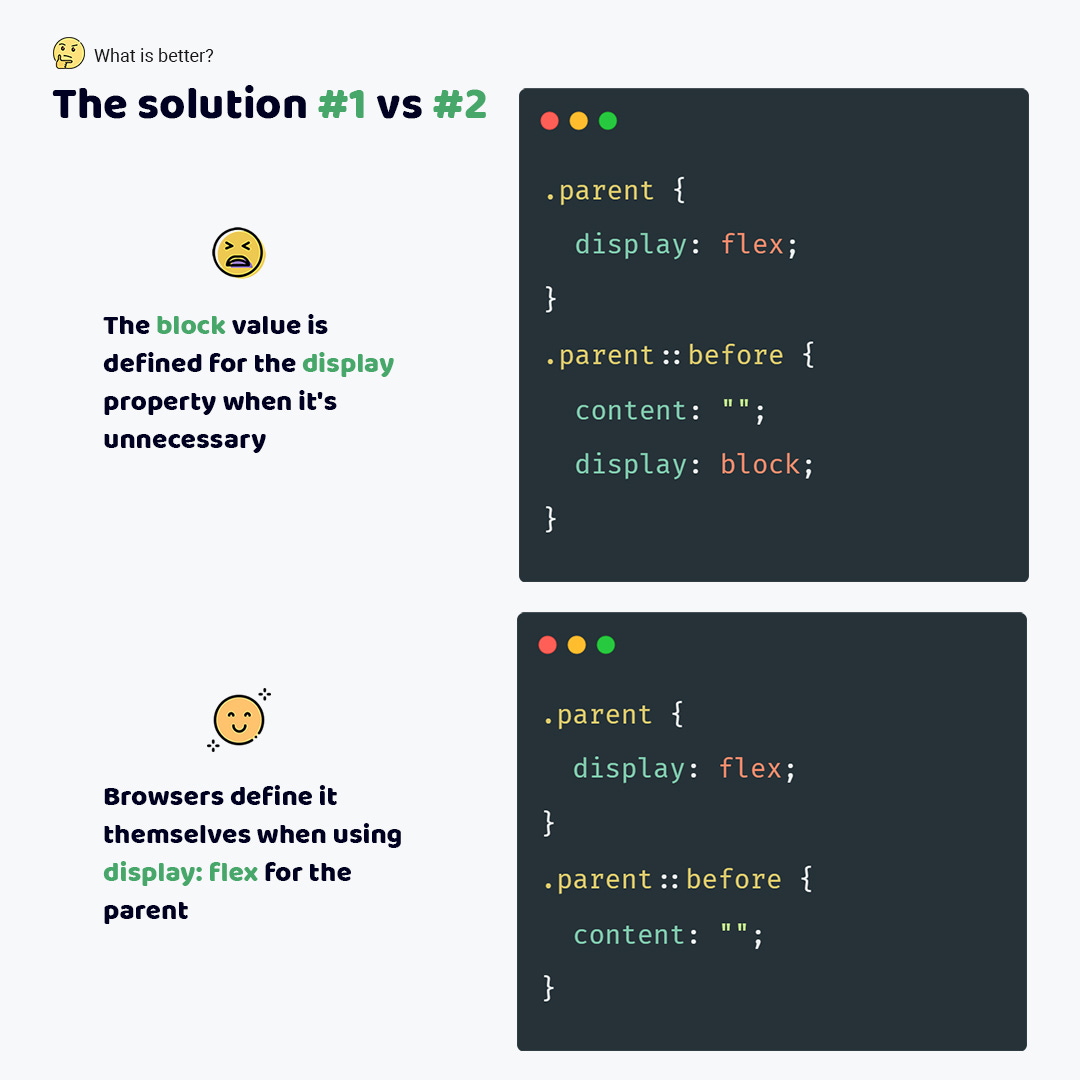
There is also a newer way that you can use for alignment or for designing the layout of the webpage, which is the flex property: display: flex; Firstly, the important thing you should know is that ?flex? is not just a property like ?block?, or ?inline?. It is a larger CSS module with various child properties.If we look at a flex item from the outside world, it's a flex-level box participating in its container's flex formatting context. From the inside world, it's a block element which means that an element inside a flex item will see the flex item as a block element.The display: flex property enables the flexbox layout mode, allowing you to manipulate elements' alignment, spacing, and order within a container.
What is a display block : display: block means that the element is displayed as a block, as paragraphs and headers have always been. A block has some whitespace above and below it and tolerates no HTML elements next to it, except when ordered otherwise (by adding a float declaration to another element, for instance).
Should you always use display flex
In return it gains simple and powerful tools for distributing space and aligning content in ways that web apps and complex web pages often need. Flexbox may still work, even if you don't need flexing. But in that case I would discourage it. Block layout is simpler, which might mean browsers can render it faster.
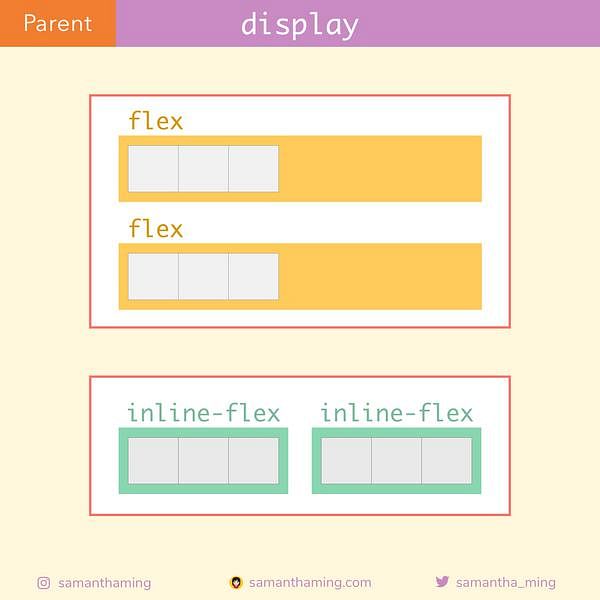
What is the difference between display flex and inline flex : The display: inline-flex property will make the element a flexbox container and the container will be inline. They can adjust their size. The items inside the container are also inline. The display: flex property will make the items of the container inline but the container will block the whole row.
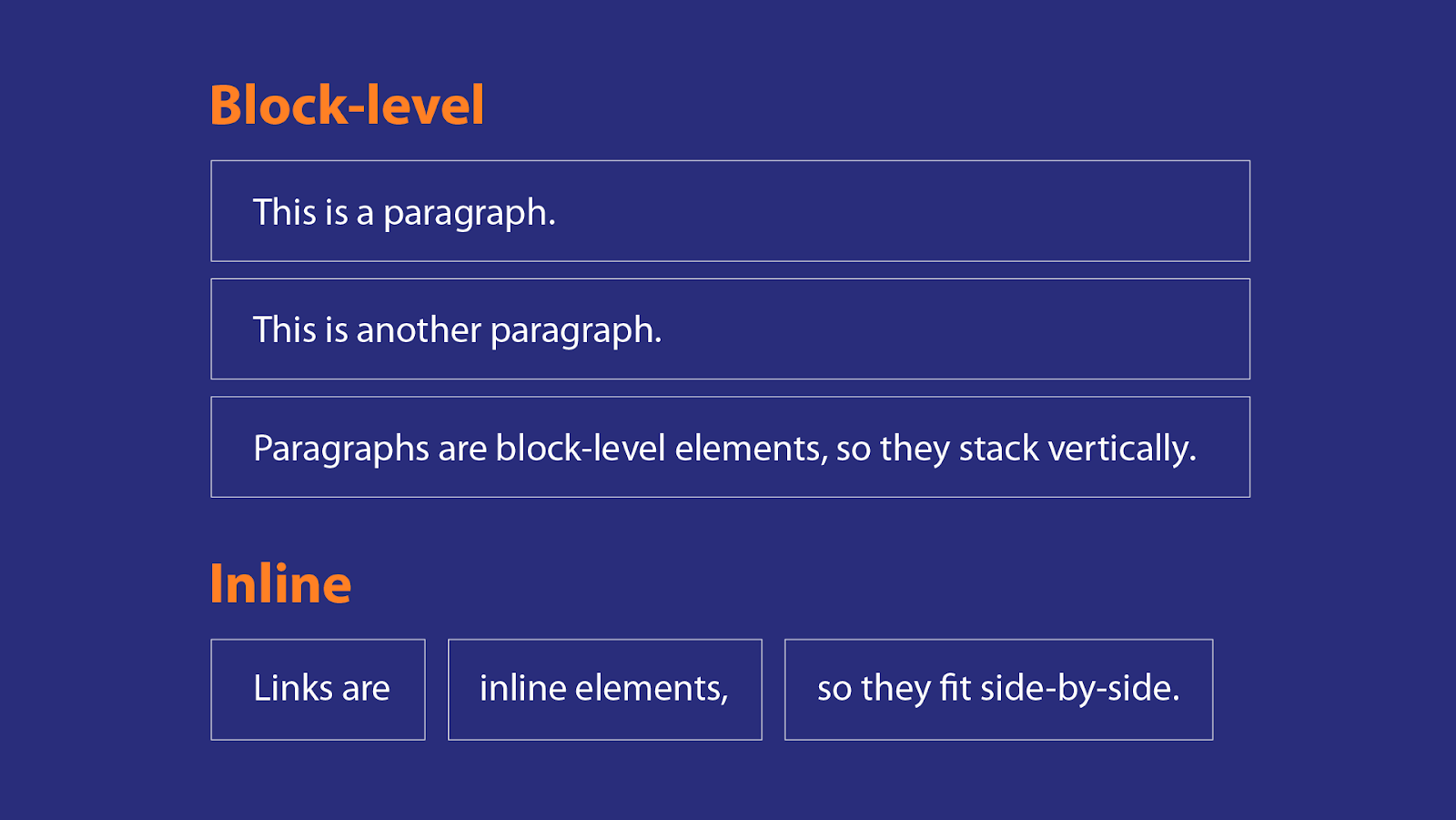
A block-level element always starts on a new line, and the browsers automatically add some space (a margin) before and after the element. A block-level element always takes up the full width available (stretches out to the left and right as far as it can). Two commonly used block elements are: <p> and <div> .
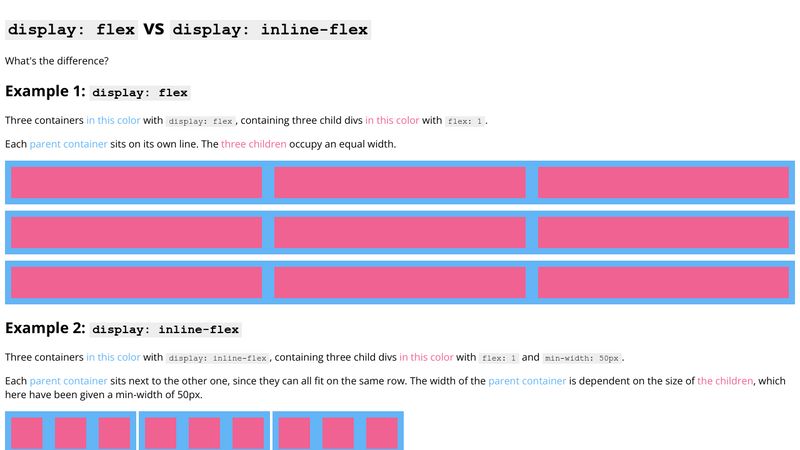
While display inline-block is used to display items horizontally by specifying a blocked region for the elements, inline-flex is known to keep space regions flexible. The following output has been obtained using inline-flex. There is not any visible difference between their respective outputs.
What is the difference between display flex and inline
The display: inline-flex property will make the element a flexbox container and the container will be inline. They can adjust their size. The items inside the container are also inline. The display: flex property will make the items of the container inline but the container will block the whole row.The display property sets or returns the element's display type. Elements in HTML are mostly "inline" or "block" elements: An inline element has floating content on its left and right side. A block element fills the entire line, and nothing can be displayed on its left or right side.Here are my top 3 use cases where you may want to avoid using the Flexbox model, and I do give reasons why.
- Using Flexbox as a true Grid System. https://www.vikingcodeschool.com/web-design-basics/designing-with-grid-systems.
- Having Complete control over Visual Placement.
- Flowing content into multiple columns, and more.
Flex is designed for laying out a single row/column, so it's best used where you have a set of elements that must be aligned, justified and arranged as such. It's a bad fit for laying out element grids (use grid!) or tables (just use a table). It's unhelpful for single elements or arbitrary positioning.
What is the difference between block and flex display : Block: Displays an element as a block element. It starts on a new line and takes up take up as much horizontal space as it can. Block-level elements do not appear in the same line but break the existing line and appear in the next line. Flex: Flex displays an element as a flexible structure.
When should I use display flex : In a perfect world of browser support, the reason you'd choose to use flexbox is because you want to lay a collection of items out in one direction or another. As you lay out your items you want to control the dimensions of the items in that one dimension, or control the spacing between items.
What is an example of a block element
Block-level Elements
Two commonly used block elements are: <p> and <div> . The <p> element defines a paragraph in an HTML document. The <div> element defines a division or a section in an HTML document. The <p> element is a block-level element.
We'll learn more about this behavior when we start to lay out pages in CSS. For now, remember this: Inline elements cannot contain block level elements.Why choose flexbox In a perfect world of browser support, the reason you'd choose to use flexbox is because you want to lay a collection of items out in one direction or another. As you lay out your items you want to control the dimensions of the items in that one dimension, or control the spacing between items.
Should I use block or flex : Block layout is simpler, which might mean browsers can render it faster. 'flex' is created for using to easy and better responsive designs, so it need more render calculate time, if you don't need responsive design it is better to use 'block' because it is more fast.