


Antwort How bad is climate change 2050? Weitere Antworten – How bad will climate change be in 2050

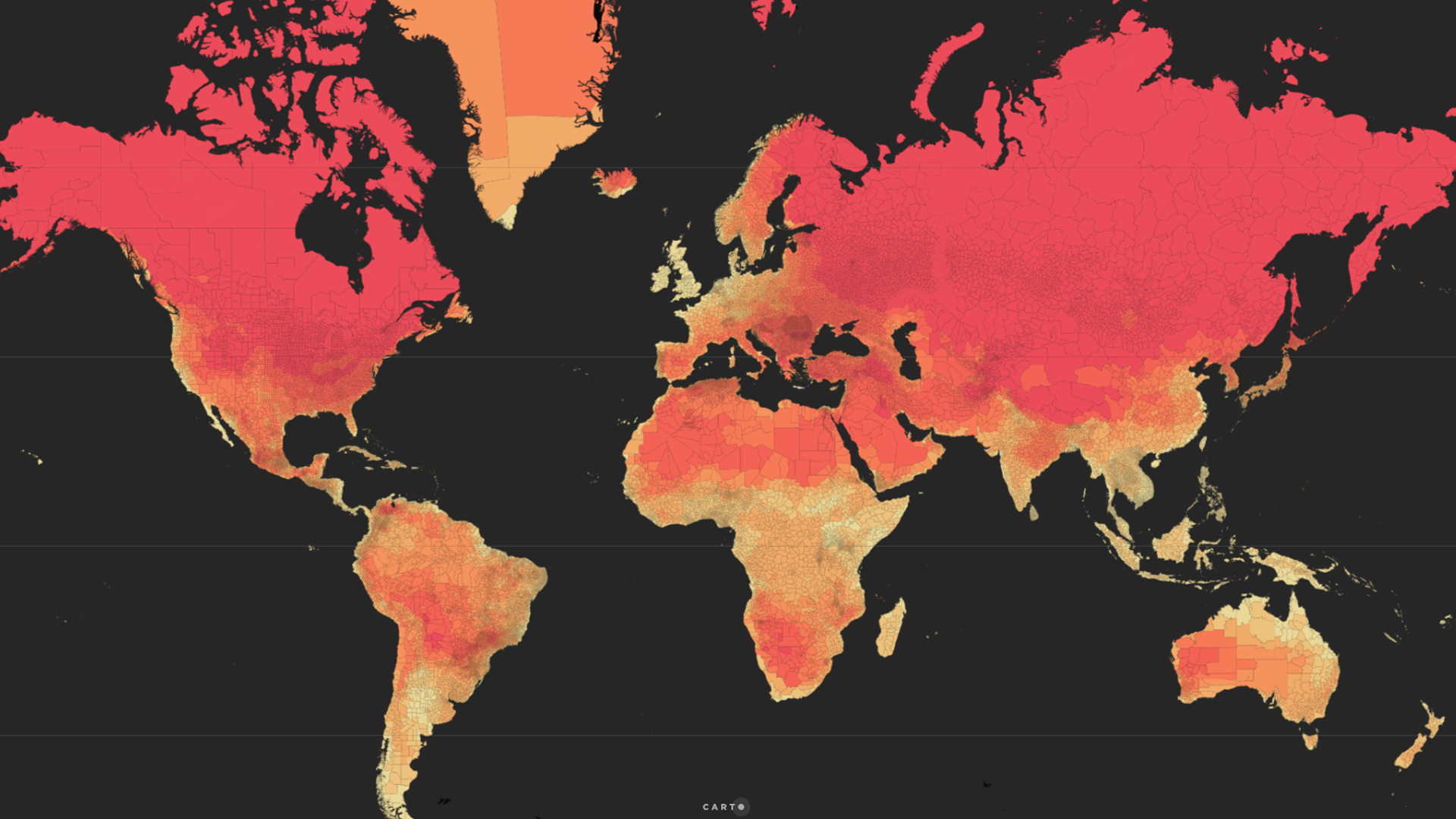
Climate shifts like heat waves could restrict the ability of people to work outdoor, and, in extreme cases, put their lives at risk. Under a 2050 climate scenario developed by NASA, continuing growth of the greenhouse emission at today's rate could lead to additional global warming of about 1.5 degrees Celsius by 2050.Even after those first scorching millennia, however, the planet has often been much warmer than it is now. One of the warmest times was during the geologic period known as the Neoproterozoic, between 600 and 800 million years ago. Conditions were also frequently sweltering between 500 million and 250 million years ago.Extreme heat, heavy downpours, and flooding will affect infrastructure, health, agriculture, forestry, transportation, air and water quality, and more. Climate change will also worsen a range of risks to the Great Lakes.
Will climate change get better : While the effects of human activities on Earth's climate to date are irreversible on the timescale of humans alive today, every little bit of avoided future temperature increases results in less warming that would otherwise persist for essentially forever.
What will life be like in 2050
Medical technology will grow with the help of AI and quantum processing, so aging will be much better, cancer cured, and some people will have a life span up to 120. Ageism will cease to exist because people will look in their 30s even if they are 95.
What will happen to Earth in 2050 : There will be a significant rise in social and financial stratification. Large cities will grow and population density will increase. The most technologically and economically advanced countries will engage in a new space race and new crewed missions to the Moon. Technologies will progress stepwise.
By the year 3000, the warming range is 1.9?C to 5.6?C. While surface temperatures approach equilibrium relatively quickly, sea level continues to rise for many centuries.

July 2023
The UN Chief spoke on the global average temperature this July, which was confirmed to be the highest on record and likely for at least 120,000 years. July also had the highest-ever ocean surface temperatures.
How hot will the earth be in 3000
By the year 3000, the warming range is 1.9?C to 5.6?C. While surface temperatures approach equilibrium relatively quickly, sea level continues to rise for many centuries.Our action, or our inaction, will determine how much the world heats up. As detailed below, it is absolutely not too late, and will not be for decades.So we do have a choice. Our action, or our inaction, will determine how much the world heats up. As detailed below, it is absolutely not too late, and will not be for decades. We have to fight and win a war now for clean energy, acting aggressively to hold global warming to the low end.

Life Expectancy Forecasts
The Social Security Administration's middle-range forecasts indicate that in 2050 e(0) will be 80.0 and 83.4 years for males and females, respectively (table 2). The Census Bureau (CB) forecasts that in 2050 e(0) for males and females will be 80.9 and 85.3 years, respectively.
How will humans look after 1,000 years : The skull will get bigger but the brain will get smaller
Humans in the year 3000 will have a larger skull but, at the same time, a very small brain. "It's possible that we will develop thicker skulls, but if a scientific theory is to be believed, technology can also change the size of our brains," they write.
How much longer will Earth live : Earth will interact tidally with the Sun's outer atmosphere, which would decrease Earth's orbital radius. Drag from the chromosphere of the Sun would reduce Earth's orbit. These effects will counterbalance the impact of mass loss by the Sun, and the Sun will likely engulf Earth in about 7.59 billion years from now.
Will humans survive in 2100
According to the July 10, 2023 article of The Economist, scientists estimated a 12% chance of AI-caused catastrophe and a 3% chance of AI-caused extinction by 2100. They also estimate an 8% chance of Nuclear War causing global catastrophe and a 0.5625% chance of Nuclear War causing human extinction.
Temperatures will be dangerously hot in more places and at more times than ever before. Less of Earth will be as agreeably habitable as in the past. Ecosystems and our relationships with ecosystems will continue to change, creating even more insecurity on the planet.He said July was ?quite likely? the warmest month in 10,000 years, not ?quite clearly.?
Which was the hottest year in human history : 2023
?Not only was 2023 the warmest year in NOAA's 174-year climate record — it was the warmest by far. A warming planet means we need to be prepared for the impacts of climate change that are happening here and now, like extreme weather events that become both more frequent and severe.