


Antwort How long until Earth is uninhabitable? Weitere Antworten – What year is Earth expected to be uninhabitable

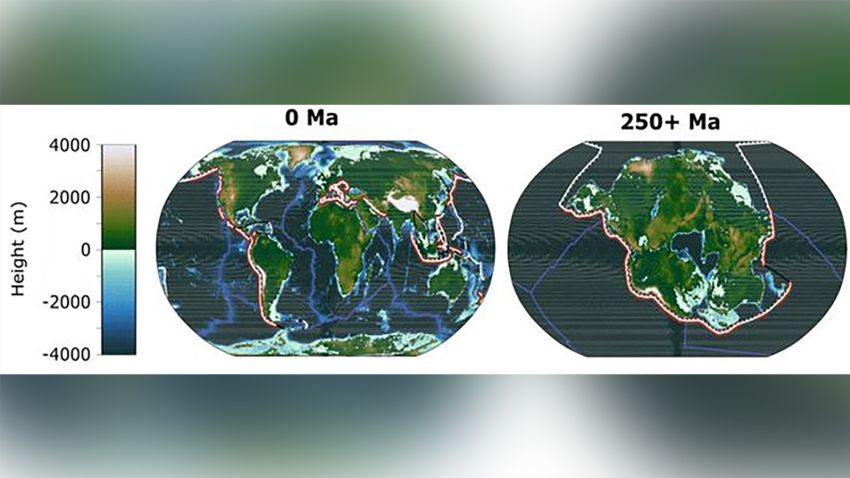
250 million years
The estimate, up to 250 million years. Earth will be inhabitable to life for one or maybe two billion years more. As before many species will get extinct due to natural climate change and probably also in short term due to anthropogenic (human activity) climate change. But life will always find a way to survive.So how long does Earth have until the planet is swallowed by the sun Expected time of death: several billion years from now. But life on Earth will end much, much sooner than that. Earth will become unlivable for most organisms in about 1.3 billion years due to the sun's natural evolution, experts told Live Science.By the year 2100, extreme heat events will make parts of Asia and Africa uninhabitable for up to 600 million people, the United Nations and Red Cross warned in October. ?This doom dynamic could manifest itself in things like a more nativist politics,? Laybourn said.

How long until the world is uninhabitable due to climate change : ?While we are predicting an uninhabitable planet in 250 million years, today we are already experiencing extreme heat that is detrimental to human health. This is why it is crucial to reach net-zero emissions as soon as possible,? Lo added.
Where will it be too hot to live in 2050
Future Hot Spots
The most vulnerable areas include South Asia, the Persian Gulf, and the Red Sea by around 2050; and Eastern China, parts of Southeast Asia, and Brazil by 2070. A prototype wet-bulb globe temperature forecast map for the Raleigh-Durham, North Carolina region.
How bad will climate change be in 2030 : It says that global average temperatures are estimated to rise 1.5 degrees Celsius (2.7 degrees Fahrenheit) above preindustrial levels sometime around ?the first half of the 2030s,? as humans continue to burn coal, oil and natural gas.
Based on known risks, the really cataclysmic ones, those that might exterminate us as a species, are fairly rare. Based on what we know today, it would be very unlikely that we wouldn't be around in the year 3000. There certainly would be bad times, but some of us would get through it. That leaves unknown risks.
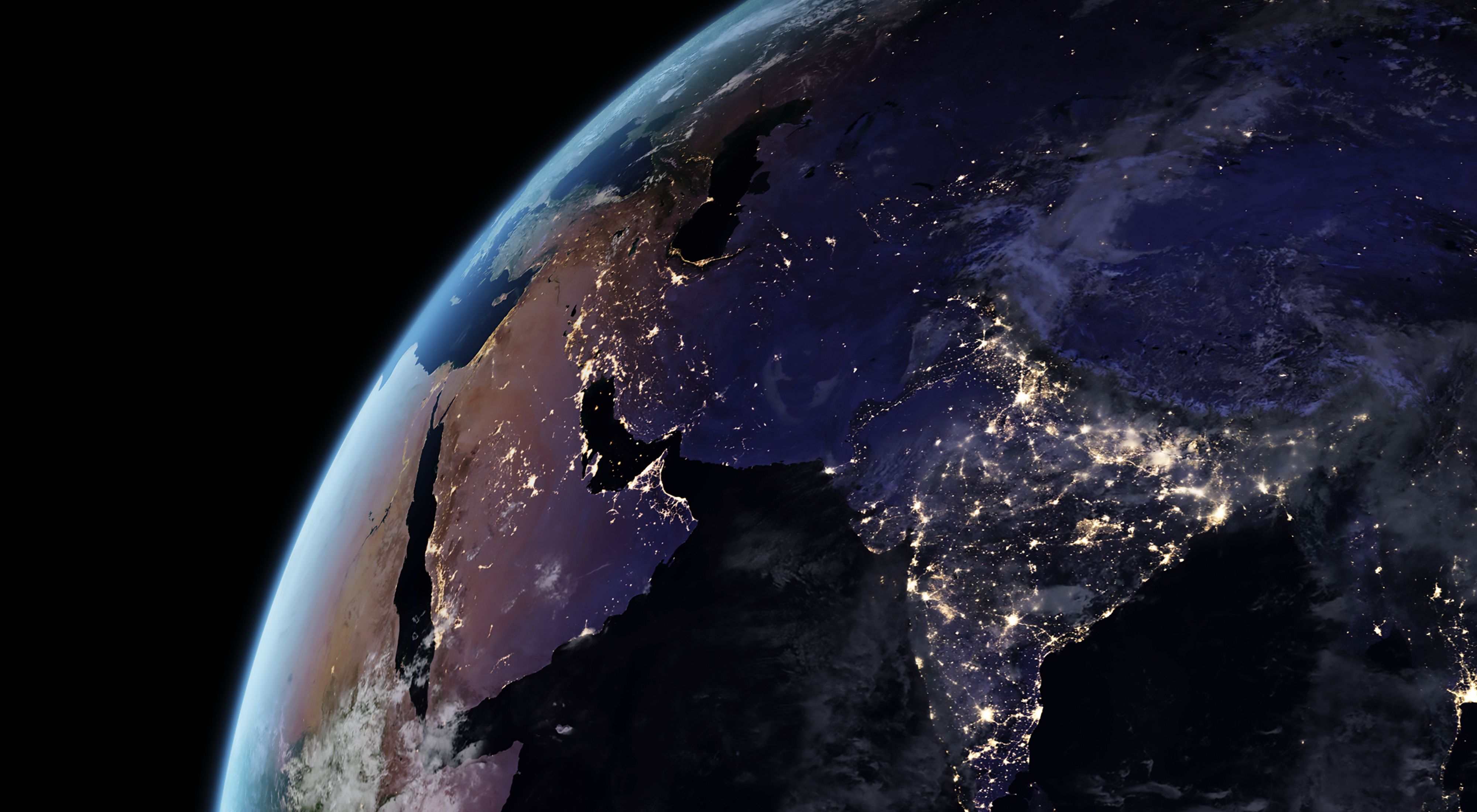
The skull will get bigger but the brain will get smaller
Humans in the year 3000 will have a larger skull but, at the same time, a very small brain. "It's possible that we will develop thicker skulls, but if a scientific theory is to be believed, technology can also change the size of our brains," they write.
Will the world be uninhabitable by 2050
Today, just one percent of the planet falls within so-called ?barely liveable? hot zones: by 2050, the ratio could rise to almost twenty percent. In 2100, temperatures could rise so high that spending a few hours outside some major capital cities of South Asia and East Asia could be lethal.The results are bleak: the supercomputer says 10 percent of all plant and animal species will disappear by 2050, and 27 percent of vertebrate diversity will vanish by 2100. Yeah, that's over a quarter of our animals gone in about 75 years.Intergovernmental Panel on Climate Change (IPCC) found that the world is likely to surpass its most ambitious climate target — limiting warming to 1.5 degrees Celsius (2.7 degrees Fahrenheit) above preindustrial temperatures — by the early 2030s.

By the year 3000, the warming range is 1.9?C to 5.6?C. While surface temperatures approach equilibrium relatively quickly, sea level continues to rise for many centuries.
How hot will the earth be in 2050 : 2.7? degrees Fahrenheit
Since 1880, average global temperatures have increased by about 1 degrees Celsius (1.7? degrees Fahrenheit). Global temperature is projected to warm by about 1.5 degrees Celsius (2.7? degrees Fahrenheit) by 2050 and 2-4 degrees Celsius (3.6-7.2 degrees Fahrenheit) by 2100.
What will humans look like in 1000000 years : Perhaps we will have longer arms and legs. In a colder, Ice-Age type climate, could we even become even chubbier, with insulating body hair, like our Neanderthal relatives
What will life be like in 2050
Medical technology will grow with the help of AI and quantum processing, so aging will be much better, cancer cured, and some people will have a life span up to 120. Ageism will cease to exist because people will look in their 30s even if they are 95.
Humans in the year 3000 will have a larger skull but, at the same time, a very small brain. "It's possible that we will develop thicker skulls, but if a scientific theory is to be believed, technology can also change the size of our brains," they write.A 2008 survey by the Future of Humanity Institute estimated a 5% probability of extinction by super-intelligence by 2100. The Global Challenges Foundation's 2016 annual report estimates an annual probability of human extinction of at least 0.05% per year (equivalent to 5% per century, on average).
What will go extinct in 2100 : What Animals Will Be Extinct By 2100
- Rhinoceros. Currently, there are about 20,000 white rhinos in Africa, classified as Near Extinction according to the IUCN.
- Saola. Meet the real-life unicorn: the saola.
- Cat Ba Langur.
- Emperor Penguins.
- Vaquita Dolphin.
- Bornean Orangutan.
- Amur Leopard.
- Sumatran Elephants.