


Antwort Why use Databricks instead of AWS? Weitere Antworten – Why Databricks is better than AWS

Databricks is also more cost-effective than AWS Glue, especially when leveraging AWS Graviton instances and enabling the vectorized query engine Photon that can substantially speed up large processing jobs. As EMR, Databricks supports spot instances, which reduce costs.Databricks is an open analytics platform. It allows its users to build, deploy, share, and maintain to-class data, analytics. It also provides best in class AI solutions.Azure Databricks makes it easy for new users to get started on the platform. It removes many of the burdens and concerns of working with cloud infrastructure, without limiting the customizations and control experienced data, operations, and security teams require.
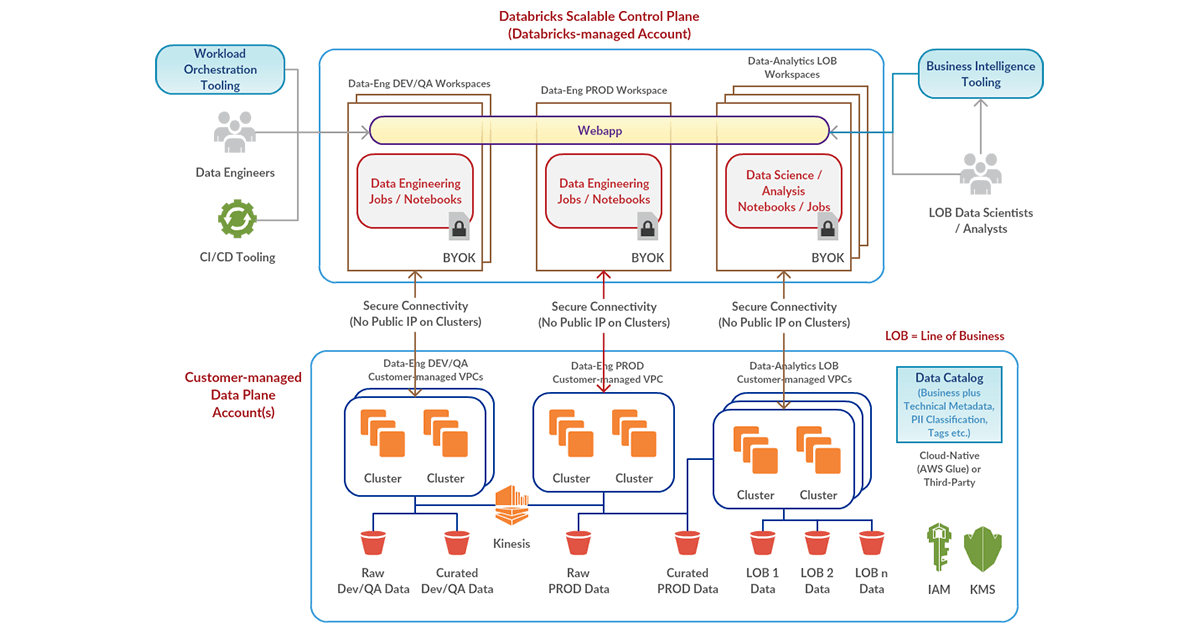
What is Databricks used for in AWS : Databricks is a unified data-analytics platform for data engineering, machine learning, and collaborative data science.
Is Databricks a competitor to AWS
In summary, Databricks wins for a technical audience, and Amazon wins for a less technically gifted user base. Databricks provides pretty much of the data management functionality offered by AWS Redshift. But, it isn't as easy to use, has a steep learning curve, and requires plenty of maintenance.
Who is Databricks biggest competitor : The top three of Databricks's competitors in the Big Data Analytics category are Apache Hadoop with 16.74%, Azure Databricks with 16.06%, Talend with 12.24% market share.
I've worked in this space in the past, and I think the big weakness of databricks is that for them to be successful as an independent company, they need to charge a lot more than AWS/GCloud/ect, and while historically they had better performance for a lot of Spark jobs, this hasn't been the case for several years now.
Databricks Cons:
Small open source community — Not as large as Apache Spark and other open source projects. Limited no-code support — Drag-and-drop interfaces are limited compared to dedicated BI/analytics platforms.
What is the difference between Databricks and AWS
In summary, Databricks wins for a technical audience, and Amazon wins for a less technically gifted user base. Databricks provides pretty much of the data management functionality offered by AWS Redshift. But, it isn't as easy to use, has a steep learning curve, and requires plenty of maintenance.Databricks helps clients store, clean and visualise vast amounts of data from disparate sources. It allows them to provide a single platform for many common data tasks ranging from basic ETL through to business intelligence all the way to ML and AI.based on preference data from user reviews. AWS Glue rates 4.2/5 stars with 187 reviews. By contrast, Databricks Data Intelligence Platform rates 4.5/5 stars with 267 reviews.
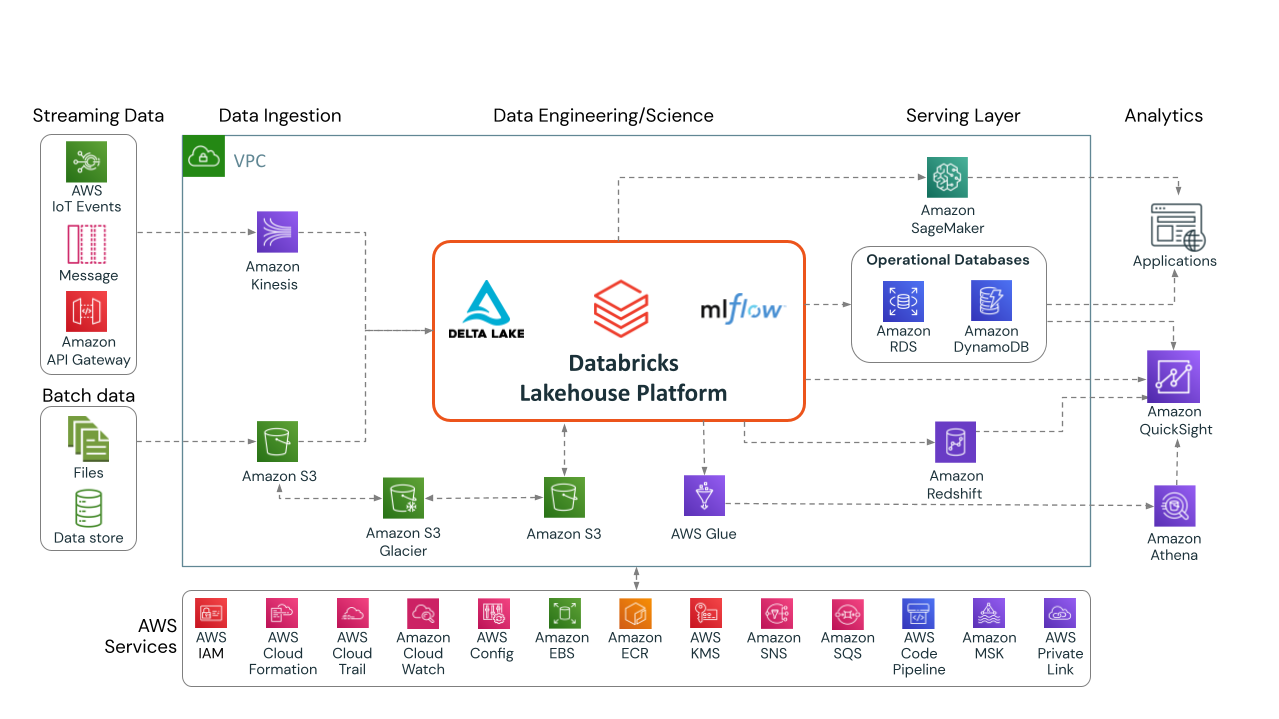
In 2015, Databricks became an AWS Data and Analytics Competency Partner to gain access to AWS managed services for data lakes and analytics and to help its customers build data and analytics applications in the cloud.
Why do people like Databricks : In simple terms, Databricks makes managing data clusters easier by providing a user-friendly interface that can process huge amounts of data in a high-performing and scalable way. Sai Kumar Enumula, a Senior Data Engineer at Tensure Consulting, likes Databricks because of the efficiency it provides.
Why not to use AWS Glue : Limitations of Real-time data
As AWS Glue only supports a handful of data sources like S3, there is no room to include an incremental synchronization with the data source. Due to the lack of incremental sync, you cannot see the real-time data for complex operations.
What are the negatives of Databricks
Databricks Cons:
Small open source community — Not as large as Apache Spark and other open source projects. Limited no-code support — Drag-and-drop interfaces are limited compared to dedicated BI/analytics platforms.
Other important factors to consider when researching alternatives to AWS Glue include integration and user interface. We have compiled a list of solutions that reviewers voted as the best overall alternatives and competitors to AWS Glue, including Fivetran, Snowflake, Alteryx, and Hevo Data.

| Advantages | Disadvantages |
|---|---|
| Fast data processing | Steep learning curve |
| Integration with other AWS services | Limited workflow customizations |
| Support for multiple programming languages | Requires expertise in data engineering |
| Fully managed platform |
Why Databricks over Spark : Databricks provides notebooks usable with your cluster. It is possible to configure standalone notebook instances to run code via a standalone Spark instance but Databricks handles the necessary configuration, making the task much easier.