


Antwort What causes criminal psychology? Weitere Antworten – What causes crime psychology

Studies indicate that personality traits of hostility, narcissism, and impulsivity correlate with criminal and delinquent behavior.Psychological Factors That Contribute to Criminal Acts
- Major Depressive Disorder.
- Dependent Personality Disorder.
- Antisocial Personality Disorder.
- Borderline Personality Disorder.
Adverse Childhood Experiences
Children raised in particularly bad situations are at an increased risk for criminal behavior in both their juvenile and adult years. In fact, research shows that convicted criminals are likely to have experienced four times as many adverse childhood events than non-criminals.
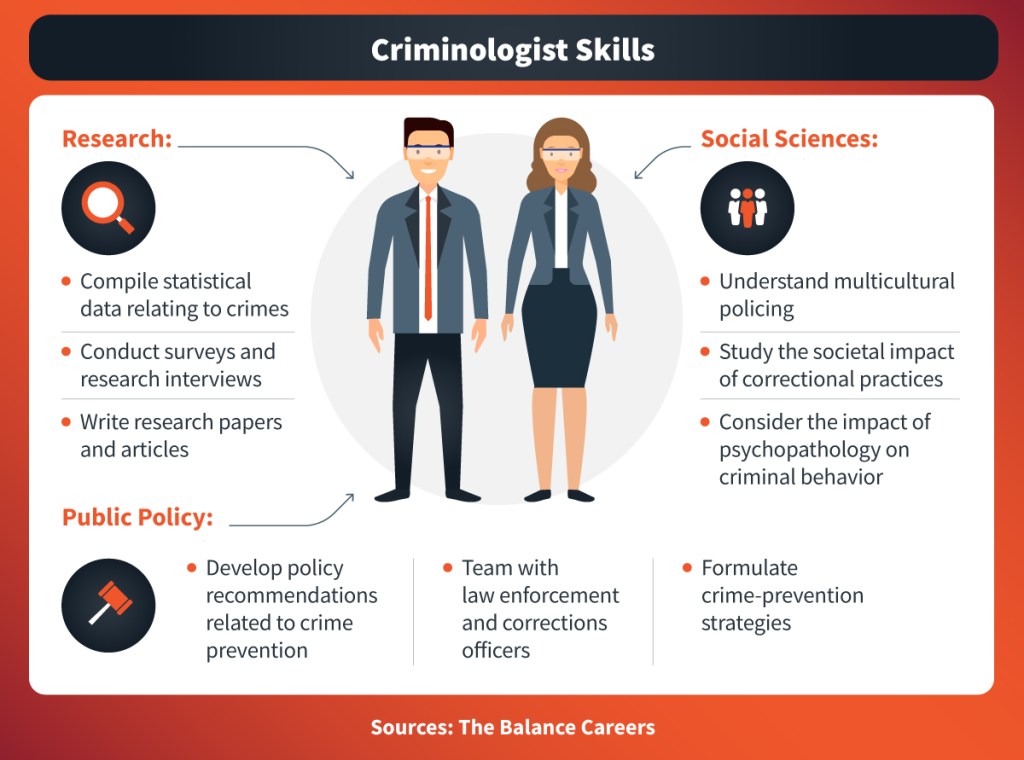
What happens in criminal psychology : Criminal psychologists seek to understand the motivations of criminals and develop a psychological profile to understand or apprehend them. They examine individual criminal behaviors and diagnose any mental health conditions.
Are criminals born or made psychology
It is generally accepted that the environment, our biological makeup, and psychological factors all have a part to play in criminal behaviour.
What personality traits are linked to crime : In specific, various personality traits can be related to criminality. For example, personality traits of psychopathy, low self-control, and a difficult temperament have been associated with criminality (Tharshini et al., 2021).
The factors that contribute to criminal behavior include biological factors, personality disorders, parenting styles, and social or environmental influences such as income and drug abuse.
At the core of Eysenck's theory is the role played by three personality traits: (1) extraversion-introversion, (2) neuroticism, and (3) psychoticism. The bulk of research into the validity of Eysenck's arguments concerns the measurement of these traits in criminal and noncriminal populations.
Does psychology play a role in criminal behavior
Psychology focuses on the behavior of individual offenders and the forces that motivate individuals to engage in criminal or violent behavior.The desire for material gain (money or expensive belongings) leads to property crimes such as robberies, burglaries, white-collar crimes, and auto thefts. The desire for control, revenge, or power leads to violent crimes such as murders, assaults, and rapes.Their research involves searching for answers through relationships, motivations, and psychological stressors in order to better understand the mind of the criminal. For example, how did a serial killer's childhood environment influence his adult decisions Or, what motivated a bank robber to begin robbing banks

One of the most famous criminal psychologists is Dr. Helen Morrison, who is known for her work in profiling serial killers. She has interviewed over 135 serial killers, including John Wayne Gacy and Ted Bundy, and has provided expert testimony in high-profile trials.
Who is more likely to commit crime : Males commit more crime overall and more violent crime than females. They commit more property crime except shoplifting, which is about equally distributed between the genders. Males appear to be more likely to reoffend.
Can personality predict crime : Low self-control and low Agreeableness independently predict criminal offending. The Big Five personality domains overcome some theoretical limitations of low self-control. Personality psychology can help better inform criminologists' understanding of crime.
What are the six traits that lead to criminal behavior
Research has identified six factors that are directly related to crime: low self-control, anti-social personality, anti-social values, criminal peers, substance abuse and dysfunctional family.
Nowadays, it is widely accepted in the scientific community that environmental factors can influence individuals' behaviors. The social environment encompasses many aspects such as family, friends, education, economic status, and neighborhood, and plays a significant role in the occurrence of crime.Certain psychiatric conditions do increase a person's risk of committing a crime. Research suggests that patients with mental illness may be more prone to violence if they do not receive adequate treatment,[8] are actively experiencing delusions, or have long-standing paranoia.
What is criminal thinking in psychology : Proactive criminal thinking is defined as goal-directed cognition designed to accomplish a criminal objective or antisocial aim.